Deep stains in porous material
A surface cleaner may not reach pigment, oil, or moisture absorbed below the top layer.
Workaround
Use a material-specific cleaner or consult the surface manufacturer before applying more pressure.
The magic eraser vs sponge decision comes down to abrasion, moisture, and the surface you are cleaning. Use this comparison to choose the tool that removes marks without creating a new problem.

A quick surface-first workflow helps prevent over-cleaning, dull finishes, and accidental damage.
Check whether it is sealed, painted, glossy, coated, fabric-based, or unfinished. A hard mark does not make every surface suitable for abrasion.
Dampen a soft sponge and test a hidden area first. Move to a magic eraser only when the mark remains and the finish can tolerate light abrasion.
Work in a small area with minimal pressure, then wipe away residue and inspect the finish under normal light before continuing.
The same mark may disappear quickly while the surrounding finish also becomes visibly different. Compare the untouched area with the cleaned result before treating a larger section.
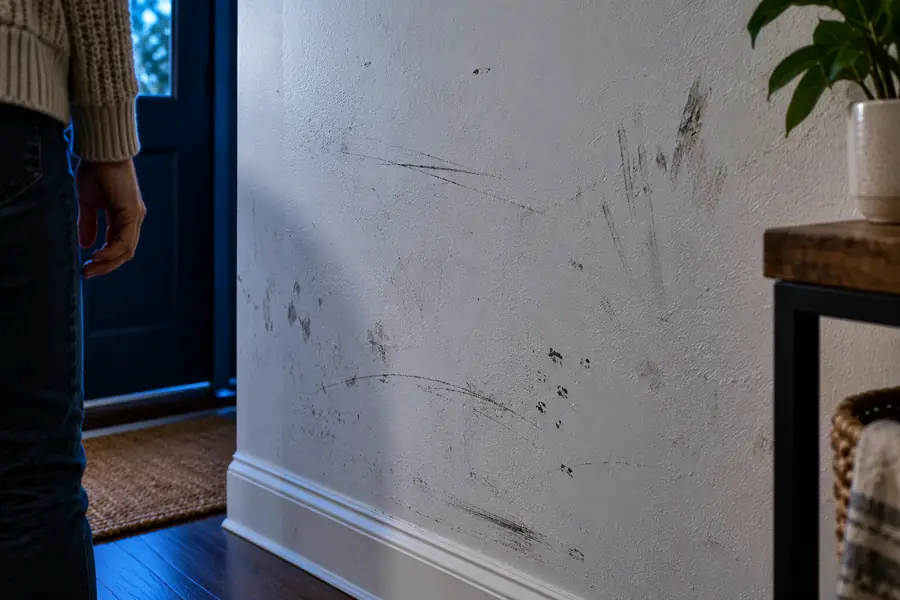 Before cleaning
 After cleaning
A sponge and a magic eraser remove some surface marks, but neither is a universal repair solution.
A surface cleaner may not reach pigment, oil, or moisture absorbed below the top layer.
Workaround
Use a material-specific cleaner or consult the surface manufacturer before applying more pressure.
Neither tool can restore paint that is peeling, chipped, permanently scuffed, or already worn thin.
Workaround
Stop when the mark changes shape but the finish does not improve, then plan a touch-up or refinishing repair.
Glossy coatings, leather, screens, polished stone, and unsealed surfaces can react unpredictably to moisture or abrasion.
Workaround
Test an inconspicuous spot with the least abrasive method and follow the care instructions first.
Repeated hand scrubbing can leave uneven sheen or visible cleaning boundaries across a broad panel.
Workaround
Clean in consistent sections with a soft sponge, matching pressure and moisture from one area to the next.
There is no universal winner. A sponge offers broader control and gentler contact, while a magic eraser is more aggressive against stubborn surface marks.
Abrasiveness
Magic eraser
Higher abrasion; effective on many stubborn surface marks but more likely to alter a finish.
Sponge
Lower abrasion when used softly; usually easier to control.
Best for
Magic eraser
Scuffs, transfer marks, and grime on durable, tested surfaces.
Sponge
Routine wiping, dust, spills, and surfaces that need gentle contact.
Moisture control
Magic eraser
Needs light dampening; excess water can spread residue or reach seams.
Sponge
Easy to use with a range of moisture levels and cleaning solutions.
Finish preservation
Magic eraser
Can dull paint, sheen, or coatings if pressed hard or used repeatedly.
Sponge
Generally safer for finishes when the sponge and cleaner are appropriate.
Spot-cleaning power
Magic eraser
Often removes isolated marks with fewer passes.
Sponge
May need more time or a suitable cleaner for set-in marks.
Large-area work
Magic eraser
Less suitable for broad panels because pressure and abrasion can become uneven.
Sponge
Better suited to consistent wiping across larger areas.
Residue handling
Magic eraser
Can leave foam particles or loosened grime that still needs wiping away.
Sponge
Works well as the follow-up tool for lifting loosened residue.
Risk when uncertain
Magic eraser
Higher; test first whenever the finish is painted, glossy, coated, or delicate.
Sponge
Lower with plain water and a soft, clean sponge, though testing is still wise.
For an unknown surface, begin with a clean damp sponge and a small hidden test. If the mark remains on a durable finish, switch to a lightly dampened magic eraser and use short, gentle passes rather than scrubbing hard.
Try the cleaning workflowThese answers address the practical questions behind choosing between the two cleaning tools.
A magic eraser is a mildly abrasive foam block designed to wear away marks from suitable surfaces. A regular sponge is mainly a wiping and absorbing tool, so it usually gives you more control and less abrasion.
No. It can be more effective on isolated scuffs and transfer marks, but it may damage or dull a surface that a sponge would clean safely. Choose based on the material first, not only on how stubborn the stain looks.
Usually, yes. Start with a clean, damp sponge and light pressure, then inspect the result. If the mark remains and the surface is durable and tested, use a magic eraser carefully as the stronger option.
No. It is better treated as a spot-cleaning tool rather than an all-purpose replacement. A sponge is more practical for routine wiping, applying cleaner, and covering larger areas evenly.
A soft damp sponge is the safer first choice because it puts less abrasion against the paint. A magic eraser may remove marks from some durable painted walls, but test an inconspicuous area and stop if the sheen changes.