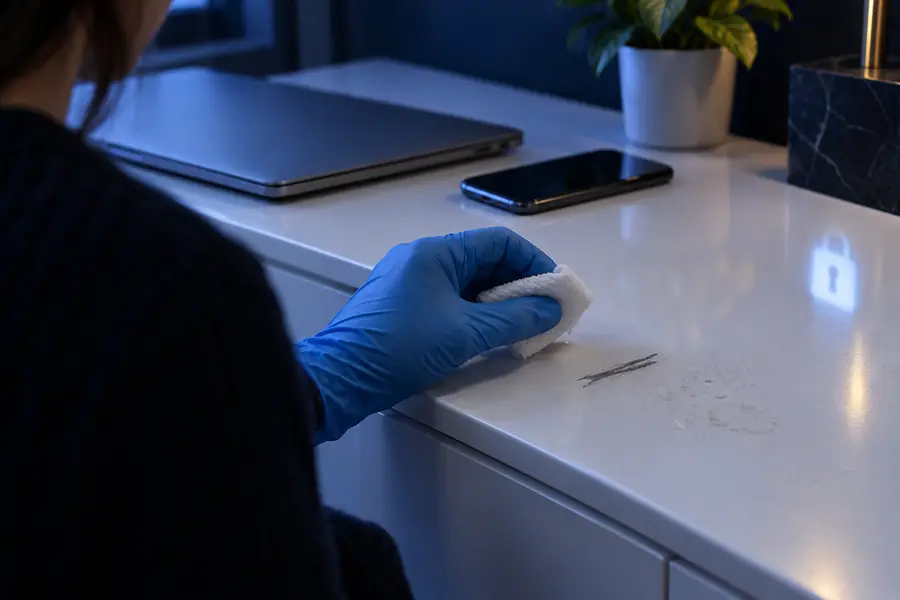
Is magic eraser safe to use? That depends on the material, the pressure, and whether you mean a physical melamine cleaning sponge or a digital photo-editing tool. This guide separates the two and focuses on careful, practical use.
A magic eraser is not a universal cleaner. Its abrasive action can remove more than the mark you intended to remove, especially on glossy, painted, coated, or soft surfaces.
It cannot judge the surface
Melamine foam does not know whether it is touching a stain, paint, finish, printed coating, or a protective layer. The same rubbing action can clean one surface and dull another.
Workaround
Test a hidden spot first and stop if the color, sheen, or texture changes.
It is not for skin
A magic eraser is an abrasive household product, not a personal-care item. Rubbing it on skin can cause irritation or tiny abrasions.
Workaround
Use soap, water, and a product intended for skin instead.
It may not remove every stain
Deep discoloration, rust, grease, permanent dye, and damage inside a material may remain after surface rubbing.
Workaround
Identify the stain and choose a cleaner made for that material rather than increasing pressure.
It cannot make damaged finishes new
A magic eraser may reduce a visible mark, but it cannot restore chipped paint, worn laminate, etched glass, or a broken coating.
Workaround
Repair or refinish the surface when the problem is structural rather than superficial.
Safer method
what changed
The safest approach is controlled and reversible: identify the surface, test lightly, then clean only as much as the mark requires.
1
Identify the material
Check whether the area is painted, glossy, coated, printed, unfinished, or delicate. When the material is unknown, treat it as vulnerable.
2
Test a hidden area
Dampen a small corner of the sponge and make a few light passes in an inconspicuous place. Wait long enough to inspect the finish before continuing.
3
Use light pressure and stop early
Work on the mark rather than the whole surface. Wipe away residue with a clean cloth and stop as soon as the result is acceptable.
Key checks
who switched
Check an unseen section before a visible clean
1test area
Keep abrasive household foam away from skin
0skin use
Use water and a soft cloth alongside gentle cleaning
2tools
Choose the safer option
who switched
The right answer to “Is magic eraser safe to use?” changes with the job. Compare a cautious, surface-specific approach with aggressive rubbing.
Controlled use
Aggressive use
Pressure
Controlled use
Light passes with frequent checks
Aggressive use
Hard scrubbing until the mark disappears
Surface choice
Controlled use
Tested, durable, non-delicate material
Aggressive use
Unknown, painted, glossy, or coated material
Moisture
Controlled use
Slightly damp, with residue wiped away
Aggressive use
Saturated or dripping sponge
Goal
Controlled use
Reduce a surface mark without changing the finish
Aggressive use
Remove every trace regardless of the finish
Stopping point
Controlled use
Stop when the mark is acceptable
Aggressive use
Continue until discoloration or wear appears
Skin contact
Controlled use
Never used on skin
Aggressive use
Applied as if it were a body scrub
Visual check
who switched
Before a careful test
After a light pass
A cleaner result is only safer when the original finish remains intact.
Where caution matters
who switched
Different people ask about magic eraser safety for different reasons. The common rule is to match the method to the surface rather than trust the product name.
Parent cleaning a wall
A child leaves scuffs on painted drywall near a doorway.
Test lightly in a hidden spot first because paint sheen and color can change with abrasion.
When a digital image needs a distracting object removed, Magic Eraser can help you work on the picture rather than experimenting with a household sponge. For physical cleaning, identify the material and test first.
A physical magic eraser is generally suitable only for compatible, durable surfaces and careful spot cleaning. It is mildly abrasive, so test an inconspicuous area, use light pressure, and stop if the finish changes.
No. Painted, glossy, polished, coated, printed, soft, and delicate materials may become dull, lighter, scratched, or uneven. Check the manufacturer’s care guidance and test a hidden area before cleaning.
No. A magic eraser is not designed for skin and can cause irritation or small abrasions because it works through abrasion. Use soap, water, or a product made for personal care instead.
No. More pressure increases the chance of removing the surface finish along with the mark. A light pass followed by inspection is safer than repeated hard scrubbing.
The digital meaning is different from the physical cleaning sponge. A photo-editing magic eraser changes image pixels rather than touching a household surface, so physical-surface safety concerns do not apply to the edited file.